Withdrawal Limits, Slot Games
Withdrawal limits explained for slot games: step-by-step, with the details most guides leave out.
What Are Withdrawal Limits?
A withdrawal limit is the maximum amount of money a slot games player can transfer out of their casino account within a set timeframe, typically defined per transaction, per day, per week, and per month. Operators set these thresholds to comply with anti-money-laundering regulations mandated by their licensing authority, to protect players from impulsive large withdrawals, and to manage their own liquidity. In India, rupee-denominated slot games platforms are increasingly aligning with guidelines issued by the Financial Intelligence Unit (FIU-IND), which means the limits you encounter are partly shaped by domestic financial regulation as well as the operator's own internal risk policy.
Limits are almost always tiered. A newly registered account with basic KYC will face lower ceilings, often in the range of ₹10,000 to ₹25,000 per day, while a fully verified account that has submitted government-issued photo ID, proof of address, and, where required, a PAN card, can access substantially higher thresholds. The exact figures vary by platform; to confirm the current limits that apply to your account tier, visit the operator's official Help Centre or Terms and Conditions page directly on their website, or contact their customer support team.
Some slot games platforms also impose a pending period, sometimes called a reversal window, during which a withdrawal sits in a processing queue and can technically be cancelled and returned to the playing balance. This window is separate from the payment network's own processing time. Understanding both the monetary ceiling and the timing rules together gives you the clearest picture of when funds will actually reach your bank account or e-wallet.
Withdrawal Limits on Mobile
When you play slot games through a mobile browser or a dedicated app, the withdrawal limits themselves do not change, the same account-level thresholds apply regardless of which device you use. What does change is the interface through which you initiate the request. Mobile cashier screens are condensed, so some of the explanatory text that appears on a desktop browser, such as inline notes about minimum and maximum amounts, may be hidden behind a tap or collapsed under an information icon.

If you are ever unsure of the ceiling shown on your mobile screen, cross-reference it by opening the operator's full Terms and Conditions page in a desktop browser or by messaging support directly.
UPI is the dominant withdrawal method for slot games players in India, and its own daily transaction limits imposed by your issuing bank sit alongside whatever the casino sets. State Bank of India, HDFC Bank, ICICI Bank, and most other major issuers cap individual UPI transactions at ₹1 lakh per day, though some banks set lower limits for gambling-category merchants. If the casino's limit is higher than your bank's UPI ceiling, you may need to split a large withdrawal across multiple days or switch to an alternative method such as a direct bank transfer (IMPS or NEFT) which typically carries a higher per-transaction cap set by your bank.
Your bank's mobile app or net-banking portal is the correct place to check and, in some cases, temporarily raise your UPI limit.
On mobile, always initiate withdrawals over a secure, private Wi-Fi or mobile data connection. Avoid public hotspots, which expose session tokens to interception. Most slot games operators use 128-bit or 256-bit SSL encryption on their mobile cashier pages, but an insecure network can still create risk at the device level. Once you submit the request on mobile, save or screenshot the confirmation reference number shown on screen, this is the only record you will have until the operator sends a confirmation email.
Withdrawal Limits, Safety and Timing
Safety and timing are two sides of the same coin when withdrawing winnings from slot games. From a safety perspective, the limit structure is a regulatory tool: it creates a paper trail of transactions that both the operator and the relevant financial authority can audit. For players based in India, this matters because the Directorate of Enforcement and the FIU-IND have the power to request transaction records from licensed operators. Keeping your withdrawals within documented, verified account tiers, and ensuring your KYC documents are accurate and up to date, means your funds move cleanly without triggering a compliance hold.
Timing depends on three separate clocks running simultaneously. First, the operator's own processing time: many slot games platforms state one to three business days for manual review of a withdrawal request, though some offer expedited processing for verified VIP accounts. Second, the payment network's settlement window: UPI transfers can settle within minutes once released by the operator, while NEFT runs in half-hourly batches during banking hours, and IMPS is near-instant but carries its own per-transaction caps.
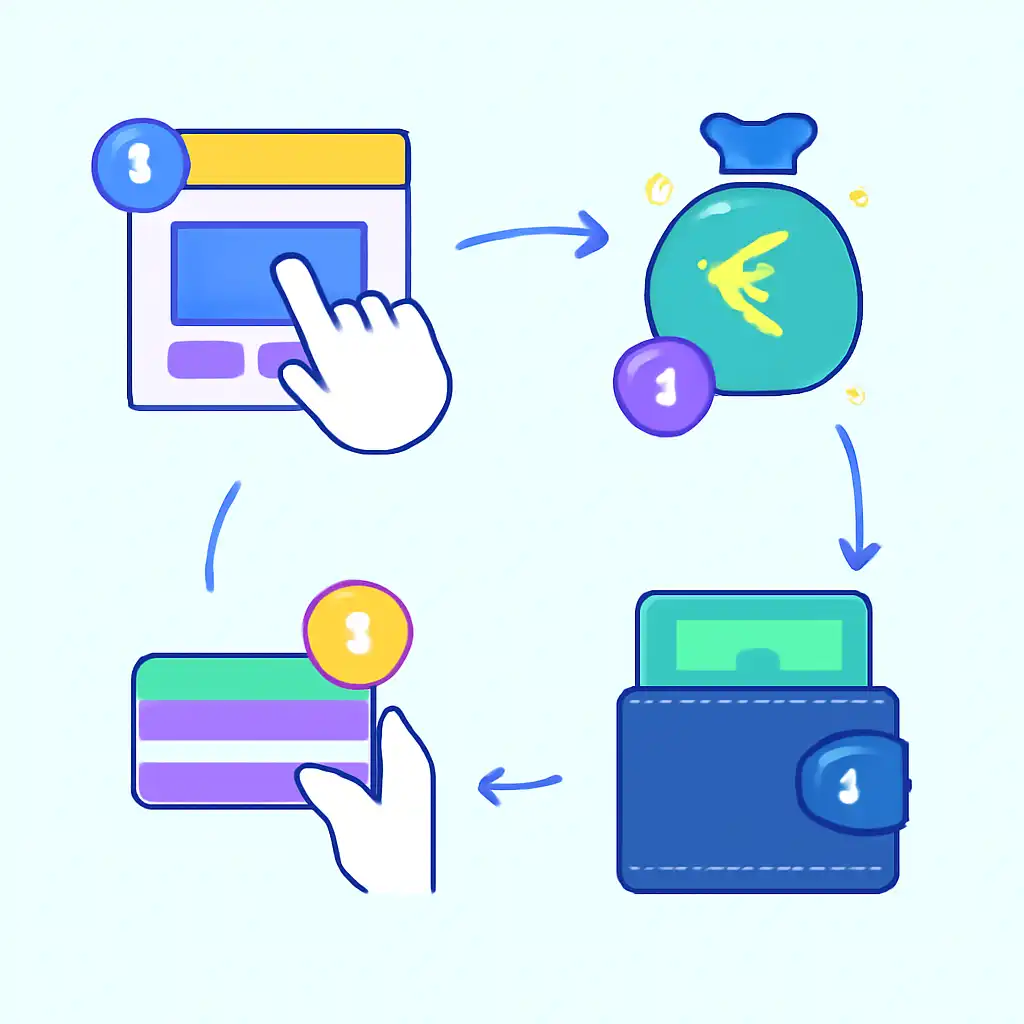
Third, your bank's own credit processing: even after funds are received, some banks hold incoming transfers for a few hours before they show in your available balance. For the precise processing times applicable to your chosen payment method, read the operator's Banking or Payments page on their official website, as these timelines are updated periodically.
To avoid timing surprises, submit withdrawal requests early on a weekday morning so the operator's finance team processes them within the same business day. Avoid submitting requests on public holidays listed by the Reserve Bank of India, as NEFT and RTGS networks are closed on those dates. If your withdrawal has not arrived within the operator's stated window, contact their support with your confirmation reference number rather than submitting a second request, duplicate requests can cause the original to be flagged for manual review, extending the delay further.
Withdrawal Limits, Step by Step
Follow this sequence to navigate withdrawal limits correctly when cashing out your slot games winnings.
Step 1, Confirm your KYC status before requesting. Log in to your account and navigate to the verification or account settings section. If your identity documents have not yet been approved, the operator will almost certainly hold the withdrawal until they are. Submit any outstanding documents, typically a government-issued photo ID such as an Aadhaar card or passport, proof of address, and your PAN card if the platform requires it, and wait for approval before proceeding. The operator's official website will list which documents they accept and the expected review time.
Step 2, Check the limit tier that applies to your account. Do not rely on memory or third-party guides for exact figures, as operators revise their limits in response to regulatory changes and internal policy reviews. Go to the operator's Terms and Conditions page or their dedicated Banking FAQ, both of which are published in plain text on their official site. Note the per-transaction maximum, the daily maximum, and any weekly or monthly cap, then plan your withdrawal amount accordingly.
Step 3, Navigate to the cashier and select your withdrawal method. Choose the payment method whose own network limits are compatible with the amount you intend to withdraw. Enter an amount that falls within both the operator's stated maximum and your bank's or e-wallet's receiving limit. If you need to withdraw more than a single transaction allows, plan multiple requests spaced across separate calendar days to stay within daily ceilings.

Step 4, Submit and record the confirmation details. Once you confirm the request, the platform will display a reference number or transaction ID on screen and typically send a confirmation to your registered email address. Save this reference. If the funds do not arrive within the operator's published processing window, contact customer support and quote this reference number. Do not submit a second withdrawal request for the same amount before resolving the first, as this can create a duplicate that requires manual intervention and further delays your payment.
Step 5, Monitor your bank account or e-wallet directly. After the operator marks the withdrawal as processed, track the incoming transfer through your bank's own net-banking portal or mobile app, or through your e-wallet's transaction history. These are the authoritative sources for the actual credit status of your funds, the slot games operator's platform reflects only what they have dispatched, not what your bank has received and credited.